
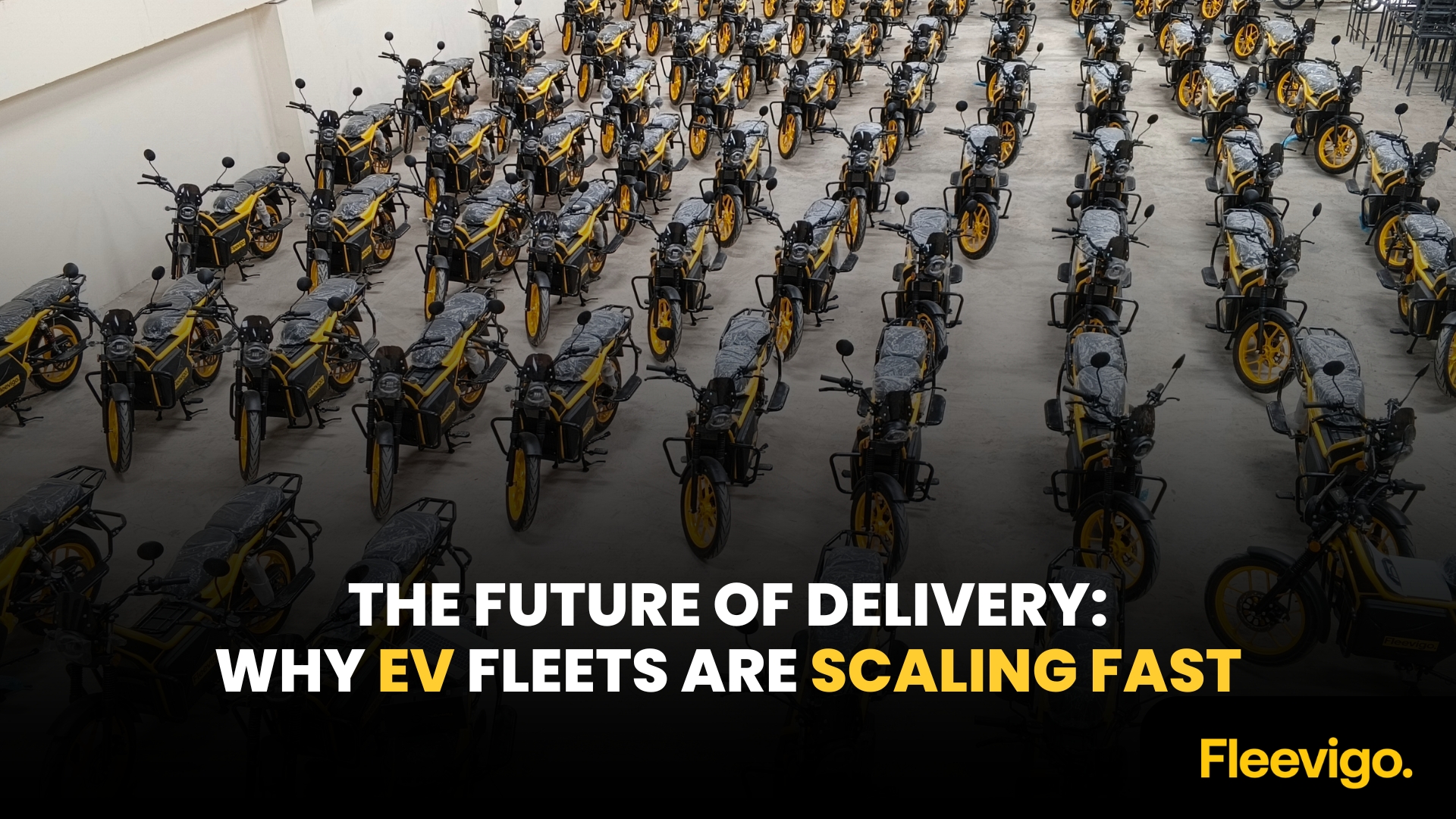
The Future of Delivery: Why EV Fleets Are Scaling Fast
Delivery is no longer just about speed. It is about cost efficiency, uptime, and how cities can scale logistics sustainably.
Across major urban markets, electric vehicle (EV) fleets are expanding rapidly. According to multiple industry reports, the global electric two- and three-wheeler market is projected to grow at over 15–20% CAGR through 2030, driven largely by delivery and last-mile logistics demand.
This shift is not theoretical anymore. It is already visible in daily fleet operations across Asia, Africa, and Europe.
So what is driving this acceleration?
1. Rising fuel costs are reshaping fleet economics
Fuel price volatility continues to be one of the biggest cost pressures in delivery operations.
In many urban markets, fuel expenses can account for 30–45% of total delivery operating costs, depending on distance and utilization rate.
EV fleets reduce this exposure significantly. Electricity cost per kilometer is often 50–70% lower than petrol-based vehicles, especially in high-frequency urban routes.
This cost difference becomes even more impactful at scale, where fleets operate dozens or hundreds of riders daily.
2. Delivery demand is growing faster than operational efficiency
Global e-commerce sales have surpassed $6 trillion annually, and last-mile delivery volume continues to grow in double digits year-on-year in many cities.
However, the challenge is not just demand. It is time utilization.
A typical fuel-based delivery rider may lose 30–60 minutes per day due to refueling, waiting, or minor maintenance stops.
At fleet scale, that translates into thousands of lost operational hours per month.
EV fleets are designed to reduce this idle time and maximize “on-road productivity”.
3. Battery swapping solves the biggest EV bottleneck
The early limitation of EV adoption has always been charging time.
Even fast charging can take 30 minutes to several hours, which is not practical for high-frequency delivery operations.
Battery swapping solves this structurally.
A fully depleted battery can be replaced in under 2–5 minutes, depending on the system design.
This allows riders to operate almost continuously throughout the day.
Platforms such as Fleevigo integrate this model into their ecosystem, enabling riders to swap batteries quickly and stay active on the road without long interruptions.
4. Higher uptime directly increases rider earnings
In delivery economies, income is strongly tied to active hours on the road.
Even a 10–15% increase in uptime can translate into a meaningful increase in daily completed trips.
EV fleets also reduce mechanical failure rates. Compared to internal combustion engines, electric drivetrains have significantly fewer moving parts, which can reduce maintenance-related downtime by 20–40% depending on usage intensity.
When combined with swapping infrastructure, the result is a more stable and predictable earning environment for riders.
5. Sustainability is becoming a commercial requirement
Regulatory pressure and platform policies are accelerating the shift toward low-emission logistics.
Many cities are introducing low-emission zones, while delivery platforms are increasingly prioritizing greener fleet partners.
Transport is responsible for nearly 25% of global CO₂ emissions, and last-mile delivery is a growing contributor in urban areas.
EV fleets help reduce emissions while maintaining operational performance, making sustainability a practical business advantage rather than just a CSR initiative.
6. Infrastructure maturity is unlocking scale
The biggest change in recent years is not just vehicle technology, but ecosystem readiness.
Battery swapping networks, fleet management systems, and EV financing models are now more accessible than before.
This is what allows EV fleets to scale beyond pilot projects into real daily operations.
Fleets like Fleevigo are part of this transition, focusing on building the infrastructure layer that supports continuous urban mobility, rather than just selling vehicles.
Conclusion
EV fleet growth is being driven by a combination of economic pressure, rising delivery demand, improved uptime solutions like battery swapping, and a more mature supporting ecosystem.
Industry data shows that adoption is no longer limited by feasibility, but by speed of rollout.
The future of delivery is not coming.
It is already operating on the streets today, powered by electric fleets that are built for efficiency, uptime, and scale.
FAQ
1. What is an EV delivery fleet?
An EV delivery fleet refers to a group of electric motorcycles, scooters, or vehicles used for logistics and last-mile delivery. Instead of relying on fuel, these vehicles run on electricity, helping reduce operating costs and emissions while improving efficiency in urban environments.
2. Why are delivery companies switching to electric fleets?
The main reasons are cost efficiency, lower maintenance, and increasing delivery demand. EV fleets can reduce fuel-related operating costs, minimize downtime, and offer more predictable performance in high-frequency delivery operations.
3. What is battery swapping in electric mobility?
Battery swapping is a system where a depleted battery is replaced with a fully charged one within minutes, instead of waiting for the battery to charge. This helps riders stay on the road continuously without long charging breaks.
4. How fast is a battery swap?
In most optimized systems, a battery swap can take around 2 to 5 minutes, depending on the infrastructure and vehicle setup. This significantly improves uptime compared to traditional charging methods.
5. Are EV fleets more cost-effective than fuel-based fleets?
In many urban use cases, yes. Electricity costs per kilometer are generally lower than fuel, and EVs also have fewer moving parts, which can reduce maintenance costs and downtime over time. However, actual savings depend on usage patterns and local energy prices.
6. How does Fleevigo support EV fleet operations?
Fleevigo focuses on enabling high-uptime electric mobility through battery swapping infrastructure and fleet support systems. This helps riders minimize downtime and maximize time on the road, which is especially important in delivery-heavy urban environments.
7. Is EV delivery suitable for all cities?
EV delivery is most effective in dense urban areas with high delivery volume and short to medium travel distances. As infrastructure like swapping stations expands, more cities are becoming suitable for EV fleet adoption.
🔗 Join the Movement
Partner with Fleevigo to bring next-gen EV mobility to your city.
🌐 www.fleevigo.com
📲 +254 113 286 286
📧 kenya@fleevigo.com