
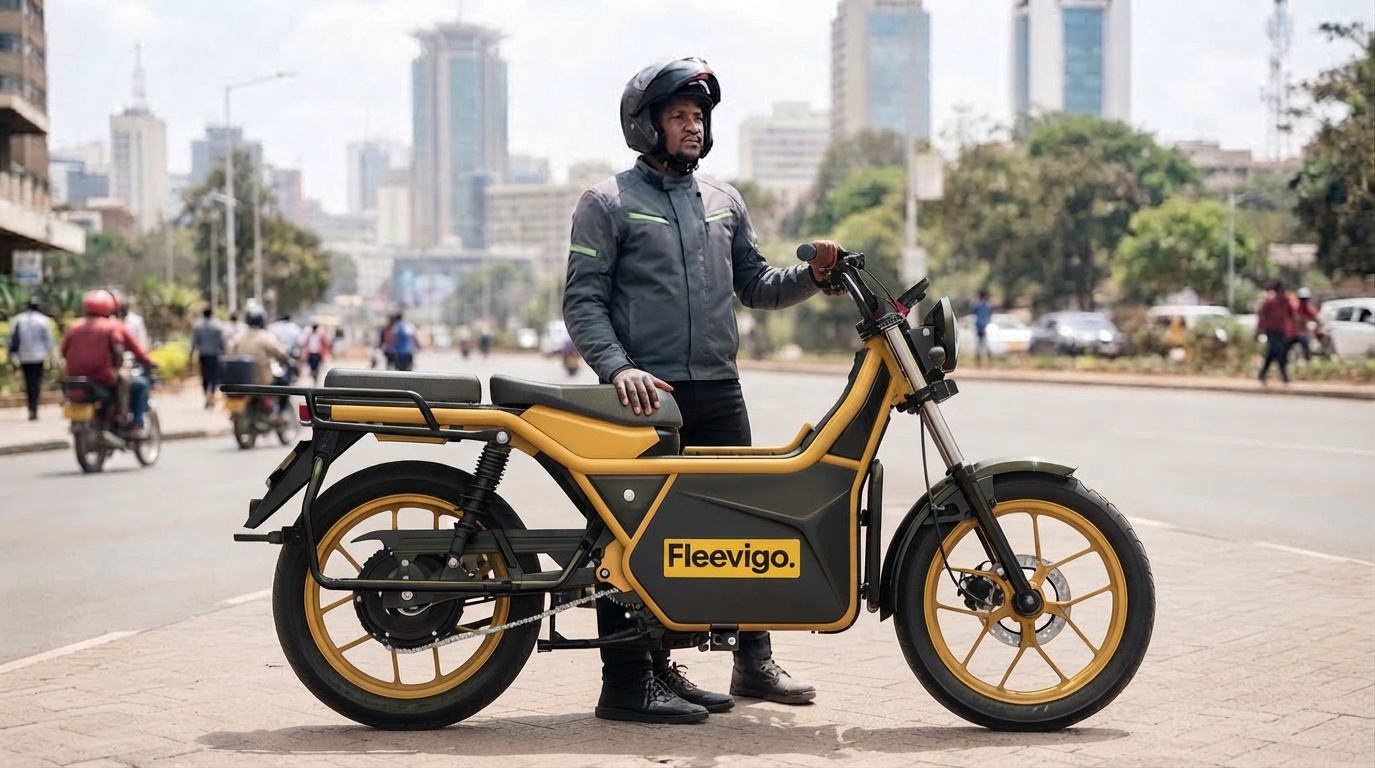
For businesses operating motorcycle fleets, profitability is not determined by the purchase price of a motorcycle alone. The real cost of running a fleet is shaped by everything that happens after the vehicle enters operation: fuel, maintenance, downtime, energy costs, utilization and the ability to keep each motorcycle working consistently.
This is where electric boda boda fleets are beginning to offer a different business proposition.
The transition from petrol to electric is often discussed in terms of sustainability and lower emissions. While these benefits matter, the business case goes further. For fleet operators, electric motorcycles can create opportunities to rethink the cost and operational structure of running a two-wheeler fleet.
Looking Beyond the Purchase Price
A motorcycle’s upfront price is only one part of its total cost.
For a fleet operator, the more important question is how much it costs to keep each motorcycle on the road over its working life. Petrol, engine maintenance, oil changes, replacement parts and other running expenses can accumulate over thousands of kilometres.
Electric motorcycles operate differently. Their powertrains have fewer moving mechanical components and do not require many of the routine maintenance activities associated with petrol engines.
This does not mean electric motorcycles are maintenance-free, but the maintenance profile can be simpler. For businesses managing multiple motorcycles, reducing the frequency and complexity of certain maintenance requirements can become increasingly valuable as the fleet grows.
Energy Costs Can Change the Equation
Fuel is one of the most visible operating expenses for a petrol motorcycle.
For a boda boda fleet that operates for long hours every day, fuel consumption can represent a significant recurring cost. Unlike the initial purchase of a motorcycle, energy costs continue throughout the vehicle’s operating life.
Electric motorcycles offer the possibility of replacing petrol expenditure with electricity-based energy costs.
With a battery-swapping model, riders can also access energy without keeping the motorcycle parked for a long charging session. This means the fleet can combine potentially lower energy costs with a system designed around continuous vehicle utilization.
For fleet operators, the important consideration is therefore not simply the price of an electric motorcycle, but the total cost of operating it over time.
Uptime Is a Business Metric
A motorcycle that is not operating is not generating value.
This is particularly important for commercial fleets, where motorcycles may be used for passenger transport throughout the day. Every hour spent dealing with unnecessary downtime can reduce the number of trips a motorcycle is able to complete.
Battery swapping can help address one part of this challenge.
Instead of waiting for a depleted battery to recharge, riders can exchange it for a charged battery and return to operation. This allows the energy replenishment process to happen with less disruption to the vehicle’s working schedule.
For fleet operators, this turns battery swapping into more than a technology feature. It becomes part of the fleet’s operational strategy.
More Utilization From Each Motorcycle
Fleet economics depend heavily on utilization.
If a motorcycle can remain operational for more hours each day, the business can potentially get more productive use from the same asset. This does not automatically mean every electric motorcycle will generate more revenue, because utilization also depends on passenger demand, rider performance and operating conditions.
However, reducing avoidable downtime creates more opportunity for the motorcycle to be used productively.
This is especially relevant for boda boda fleets, where motorcycles can spend long periods moving through urban areas and carrying passengers. A system that allows riders to replenish energy quickly can support the high-utilization nature of the business.
A Fleet Is More Than a Collection of Motorcycles
As a fleet grows, managing individual motorcycles becomes increasingly complex.
Operators need to think about maintenance schedules, energy availability, vehicle utilization and the condition of each asset. A scalable electric fleet therefore requires more than simply purchasing electric motorcycles.
It requires an ecosystem.
Battery swapping can help create that ecosystem by separating the motorcycle from the charging process. Batteries can be charged within the network while motorcycles remain in operation, allowing energy resources to be managed independently from individual vehicles.
This can create a more flexible approach to fleet energy management as the number of motorcycles increases.
Why Battery Swapping Matters for Fleet Operators
For a private EV owner, charging is usually a personal convenience.
For a commercial fleet, it is an operational consideration.
A fleet operator needs to know when motorcycles are available, when they need energy and how much time they can spend out of service. Long charging periods can create challenges when vehicles are expected to operate continuously.
Battery swapping provides another model.
Instead of assigning a fixed charging period to each motorcycle, charged batteries can be made available through a network and exchanged when required. This can help fleets maintain operational continuity while batteries are charged separately.
The result is a system designed around vehicle availability rather than charging availability.
Scaling Electric Fleets
The business case becomes even more relevant when a fleet grows.
Operating five motorcycles and operating hundreds of motorcycles are very different challenges. As the fleet expands, small differences in energy cost, maintenance requirements and downtime can become much more significant across the entire operation.
This is where the structure of an electric mobility ecosystem matters.
A network of battery-swapping stations can support multiple motorcycles, while standardized batteries and centralized energy management can create a more predictable operating environment for fleet operators.
The objective is not simply to replace petrol motorcycles one by one.
It is to build a fleet model that can scale.
Supporting a More Predictable Cost Structure
Businesses value predictability.
Fuel prices can fluctuate, while unexpected mechanical issues can create unplanned expenses and downtime. Fleet operators therefore need to look beyond average costs and consider how predictable those costs are over time.
Electric mobility can change several of these variables.
Energy costs are different from petrol costs. Electric powertrains have different maintenance requirements. Battery swapping changes how energy is replenished. Together, these differences can give fleet operators a new way to structure and manage operating expenses.
The exact savings will depend on factors such as electricity prices, mileage, motorcycle utilization, maintenance practices and local operating conditions. But the underlying opportunity is clear: electrification can change the economics of running a high-utilization motorcycle fleet.
The Bigger Opportunity for Kenya
Kenya’s boda boda sector is already an essential part of everyday mobility. For fleet operators, the opportunity is not simply to introduce a cleaner motorcycle. It is to build a more efficient way of operating one of the country’s most important forms of urban transportation.
Electric motorcycles, supported by battery swapping, can bring together lower energy dependence on petrol, different maintenance requirements and a model designed around high vehicle utilization.
For riders, this can mean a motorcycle that is easier to keep operational throughout the day. For fleet operators, it creates an opportunity to rethink how vehicles are financed, operated, maintained and scaled.
The Business Case Is About the Whole System
The strongest argument for electric boda boda fleets is not based on a single advantage.
It is the combination of multiple factors.
Lower dependence on petrol can affect recurring energy costs. A simpler powertrain can change maintenance requirements. Battery swapping can reduce charging-related downtime. Higher availability can support better utilization. And a dedicated ecosystem can make it easier to scale as demand grows.
None of these factors alone determines whether an electric fleet will be commercially successful.
Together, however, they create a compelling business case for operators willing to look beyond the initial cost of the motorcycle.
Building the Next Generation of Boda Boda Fleets
The future of commercial mobility will not be defined simply by whether motorcycles become electric. It will depend on whether electric mobility can deliver a practical and sustainable business model for the people and companies operating those motorcycles.
For Kenya’s boda boda sector, that means thinking beyond the motorcycle itself and considering the entire operating ecosystem: the rider, the battery, the swap network, the energy supply and the economics of daily operation.
At Fleevigo, we believe electric mobility should work not only for the environment, but also for the businesses and riders who depend on mobility every day.
The goal is not simply to build electric motorcycles. It is to build a more efficient, scalable and sustainable way to keep them working.
Build the Future of Boda Boda Mobility
The shift to electric is not just a change in how motorcycles are powered. It is an opportunity to build a more efficient and scalable model for commercial mobility in Kenya.
Ready to explore what an electric fleet could look like for your business?
Partner with Fleevigo and take the next step towards smarter, cleaner, and more sustainable mobility.
🌐 www.fleevigo.com
📲 +254 113 286 286
📧 kenya@fleevigo.com