
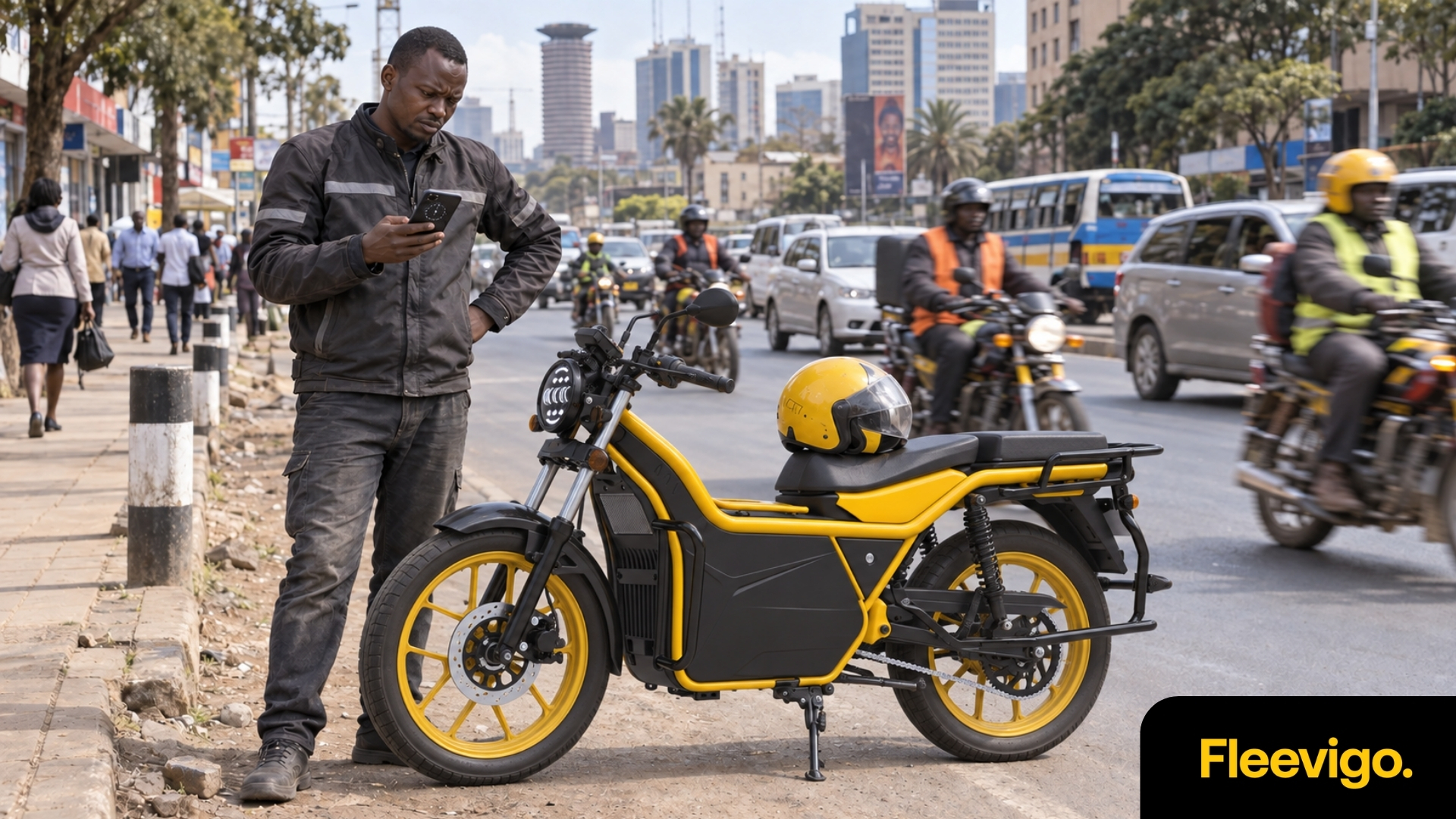
Kenya’s electric mobility market is moving beyond the early stage of simply introducing electric vehicles.
The bigger question now is what needs to happen around those vehicles for electric mobility to scale.
For boda-boda riders, fleet operators and mobility businesses, an electric motorcycle is only one part of the equation.
There needs to be access to financing.
There needs to be energy infrastructure.
There needs to be battery support.
There needs to be maintenance.
And there needs to be a business model that makes sense for the people using the vehicles every day.
The future of electric mobility will be built as an ecosystem.
Kenya Is Moving Towards a More Electric Transport System
Kenya officially launched its National Electric Mobility Policy in February 2026.
According to the Ministry of Roads and Transport, Kenya had registered 39,324 electric vehicles cumulatively by 2025, compared with 1,378 in 2022. The Ministry also stated that the boda-boda category recorded the highest percentage increase among vehicle categories.
The policy provides a framework intended to support the adoption and expansion of electric mobility across Kenya.
It covers areas including:
- EV adoption
- Charging infrastructure
- Investment
- Local manufacturing and assembly
- Technical skills
- Regulation and standards
- Fiscal and non-fiscal incentives
- Private-sector participation
Implementation work is continuing in 2026, with government, industry, development partners and other stakeholders working on practical measures around infrastructure, financing, technical capacity and standards.
This matters because the transition to electric mobility cannot happen through vehicles alone.
Why Two-Wheelers Matter
Kenya’s transport landscape makes electric motorcycles particularly relevant.
Boda-bodas already play an important role in everyday mobility, connecting passengers to destinations that may be difficult to reach efficiently by larger vehicles.
For riders, the motorcycle is also a productive asset.
That creates a different set of requirements from those of a private passenger vehicle.
A commercial electric motorcycle needs to be:
- Affordable to access
- Practical for long working hours
- Easy to maintain
- Supported by reliable energy infrastructure
- Suitable for local road conditions
- Compatible with the rider’s income model
This is why the development of electric two-wheelers can have an impact beyond simply reducing petrol consumption.
It can influence the economics of an entire category of commercial mobility.
The Motorcycle Is Only the Starting Point
Imagine giving a rider an electric motorcycle but no convenient way to replenish the battery.
The vehicle may have good technology, but the business model becomes difficult.
Now add a reliable battery-swapping network.
The equation changes.
Add financing that makes the vehicle accessible.
It changes again.
Add maintenance support, insurance, fleet management and rider partnerships.
The result is no longer simply an electric motorcycle.
It becomes an electric mobility platform.
This is the direction in which the industry is developing.
Infrastructure Will Shape Adoption
One of the key challenges for electric mobility is infrastructure.
The Ministry of Roads and Transport has noted that EV charging infrastructure remains concentrated around Nairobi and needs to expand to other parts of the country.
For commercial motorcycles, infrastructure also needs to reflect how riders actually work.
A private EV owner may be comfortable charging overnight at home.
A boda-boda rider may need access to energy repeatedly during the working day.
That is why different energy models — including charging and battery swapping — can serve different types of users.
The important question is not simply how many charging or swapping points exist.
It is whether the infrastructure is accessible, reliable and positioned around actual mobility demand.
Financing Is Part of the Transition
Technology alone does not determine adoption.
Access does too.
For many commercial riders, purchasing a new motorcycle represents a significant financial decision. The availability of asset financing and other ownership or leasing models can therefore influence how quickly electric motorcycles become accessible to a wider group of riders.
Kenya’s e-mobility policy specifically highlights investment and financing alongside infrastructure, manufacturing and technical development.
This reflects an important reality:
A vehicle can only scale when the people who need it can access it.
Building Around the Rider
The most useful electric mobility solutions start with the rider’s daily reality.
How many kilometres does the rider travel?
Where does the rider operate?
When does the rider need to swap or charge?
How much can the rider reasonably pay?
What happens when the motorcycle needs maintenance?
How can downtime be reduced?
These questions are just as important as battery capacity or motor power.
For Fleevigo, this rider-first approach is central to developing electric mobility solutions in Kenya.
The objective is not to replace one motorcycle with another.
It is to build an operating system that makes electric mobility practical for commercial use.
From Vehicles to Mobility Platforms
The next phase of Kenya’s electric mobility transition will involve more than increasing the number of electric motorcycles on the road.
It will involve connecting the different parts of the ecosystem:
Vehicles → Batteries → Energy Infrastructure → Financing → Maintenance → Riders → Mobility Platforms
When these elements work together, electric mobility becomes easier to access and easier to operate at scale.
This is also where private-sector innovation has an important role to play.
Kenya’s government is continuing to work with industry players and other stakeholders on the implementation of the National Electric Mobility Policy, including infrastructure, financing, technical capacity and partnerships.
What Comes Next?
Kenya has already moved from discussing electric mobility as an emerging idea to creating a national framework for its development.
The next challenge is execution.
More infrastructure.
More accessible financing.
More technical capacity.
More practical solutions for commercial riders.
And mobility platforms that connect these pieces together.
For Kenya’s boda-boda sector, this could mean that the future of electric mobility is not simply about riding an electric motorcycle.
It is about having an entire system designed to keep that motorcycle — and its rider — moving.
Building the Future of Electric Mobility in Kenya
Fleevigo is working to make electric mobility more accessible, practical and scalable for riders and businesses in Kenya.
From electric motorcycles and battery solutions to the wider ecosystem supporting commercial mobility, our focus is on building solutions around how people actually move and work.
The future is not just electric.
It is connected, accessible and built around the people who keep Kenya moving.
Ready to explore electric mobility for your business?
Get in touch with Fleevigo Kenya:
📞 +254 116 828 711
📧 kenya@fleevigo.com