

What if your existing shop could do more than sell everyday essentials?
For many small business owners in Kenya, growing a business means finding new ways to attract customers, increase revenue, and make better use of the space they already have.
But expanding a business often comes with challenges. Opening another shop, purchasing additional stock, or introducing new services can require significant investment.
What if there were another way?
At UMM General Store in Ngara, Nairobi, business owner Andrew Murimi is exploring a different opportunity: partnering with Fleevigo to provide battery-swapping services for electric motorcycle riders.
His experience offers a glimpse into how local businesses can become part of Kenya’s growing electric mobility ecosystem.
Meet Andrew Murimi, Owner of UMM General Store
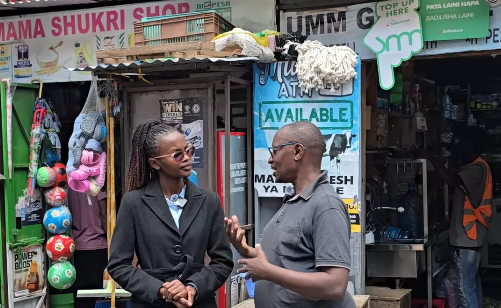
Located in the busy neighbourhood of Ngara, UMM General Store serves its community by selling everyday retail essentials.
Like many neighbourhood shops across Nairobi, it plays an important role in making daily necessities accessible to local residents.
But Andrew’s business is doing something beyond traditional retail.
By joining Fleevigo’s battery-swapping network, his store has become a place where electric motorcycle riders can access battery-swapping services.
In a recent interview with Fleevigo, Andrew shared his experience as a battery-swapping partner, discussing his business, the swapping activity at his location, and the opportunities and challenges he has encountered.
His story highlights how an ordinary retail shop can participate in a growing industry without abandoning its core business.
The Challenge: How Can Small Shops Generate Additional Income?
Running a small retail business is not always easy.
Shop owners must manage stock, cover operating expenses, attract customers, and maintain consistent sales.
Some days are busy. Others are quieter.
For many business owners, relying on a single source of revenue can make long-term growth challenging.
Expanding into a completely new business may not be practical, especially when it requires additional premises, employees, or substantial upfront investment.
This is where partnerships can create new possibilities.
Instead of starting from scratch, shop owners can explore opportunities that complement their existing operations.
Fleevigo’s battery-swapping partner programme is designed around this idea.
Turning an Existing Shop into a Battery-Swapping Point
As electric motorcycles become part of Kenya’s transport landscape, riders need convenient access to reliable energy.
Unlike petrol motorcycles, battery-swapping electric motorcycles allow riders to exchange a depleted battery for a charged one at a designated swapping location.
This reduces the need to wait for conventional charging.
But for battery swapping to be convenient, swapping points must be accessible in the communities where riders operate.
That’s where local businesses come in.
Through Fleevigo’s battery-swapping network, eligible shops can become convenient battery-swapping locations.
For business owners, this creates an opportunity to introduce an additional service alongside their existing operations.
For riders, it means having more accessible places to swap batteries and continue their journeys.
It’s a partnership that connects local businesses with the needs of electric motorcycle riders.
Andrew’s Experience as a Fleevigo Partner
During his interview, Andrew discusses what it has been like to operate as a Fleevigo battery-swapping partner.
He shares his perspective on the experience, the number of swaps taking place at his shop, the financial side of the partnership, and the challenges involved.
One of the key themes of his interview is the practical experience of adding battery swapping to an existing retail business.
His story is especially relevant to other shop owners who may be curious about joining the electric mobility industry but are unsure what operating a swapping point involves.
Andrew’s experience shows that battery-swapping partnerships are not limited to large companies or dedicated energy businesses.
Neighbourhood shops can also have a role to play.
And as Kenya’s electric motorcycle ecosystem develops, these local partnerships could become increasingly important.
Why Battery Swapping Creates Opportunities for Local Businesses
The benefits of becoming a battery-swapping partner go beyond participating in electric mobility.
For eligible business owners, the programme offers several potential advantages.
1. An Additional Income Opportunity
Battery swapping provides an opportunity to generate income from a service that complements an existing business.
Rather than depending entirely on retail sales, participating shop owners can explore another source of earnings.
Actual earnings depend on factors such as swapping activity and the terms of the partnership.
2. More People Visiting Your Location
A battery-swapping point can bring electric motorcycle riders to a shop.
While riders visit primarily to exchange batteries, their presence may also create opportunities for additional retail purchases.
For a neighbourhood business, increased visibility and foot traffic can be valuable.
3. Making Better Use of Existing Business Space
Not every business expansion requires opening a new location.
For shops with suitable available space, battery swapping can be an opportunity to introduce another service within their existing premises.
4. Becoming Part of Kenya’s Electric Mobility Future
Electric mobility is creating new opportunities beyond motorcycle ownership and riding.
It also requires supporting infrastructure, accessible energy services, and strong local partnerships.
By becoming battery-swapping points, neighbourhood businesses can contribute to making electric mobility more practical for riders.
Supporting Riders, Supporting Local Businesses
For electric motorcycle riders, time matters.
Long waits and inconvenient access to energy can interrupt their working day.
A growing network of battery-swapping locations helps riders access charged batteries and continue working.
At the same time, the network creates opportunities for participating local businesses. This relationship is central to Fleevigo’s approach.
When riders have convenient access to battery swapping, they can keep moving. When local shops participate in the network, they have an opportunity to grow alongside the electric mobility industry.
It’s about building an ecosystem where riders and businesses can benefit from one another.
Could Your Shop Be the Next Fleevigo Battery-Swapping Point?
Andrew’s story at UMM General Store is one example of how a neighbourhood business can explore new opportunities through electric mobility.
Whether you operate a grocery shop, convenience store, motorcycle repair shop, or another suitable local business, your space could potentially become part of Fleevigo’s growing battery-swapping network.
You don’t necessarily need to change what your business already does.
Instead, you could explore adding a service that connects your shop to the needs of electric motorcycle riders.
Already running a shop? Your space could create another income opportunity.
Become a Fleevigo Battery-Swapping Partner and discover how your business can grow with Kenya’s electric mobility ecosystem.
📩 Contact Fleevigo Kenya today to learn more about becoming a battery-swapping partner.
📱 WhatsApp: +254 751 088 783 (Alex)
📧 Email: kenya@fleevigo.com
Watch Andrew’s story: UMM General Store — Fleevigo Battery-Swapping Partner Interview.